Thoughtful care, close to home
A clearer conversation about what comes next.
Here is what patients in Danville and South-Central Virginia should know about sleep apnea, the signs worth paying attention to, and how oral appliance therapy works.
Snoring is easy to joke about, but disrupted sleep is no laughing matter. If you wake up tired no matter how early you go to bed, or a partner has noticed that you snore loudly or seem to stop breathing at night, your sleep may be affected by obstructive sleep apnea. What surprises many people is that a dentist can play a real role in treatment.
Here is what patients in Danville and South-Central Virginia should know about sleep apnea, the signs worth paying attention to, and how oral appliance therapy works.
What Is Obstructive Sleep Apnea?
Obstructive sleep apnea, often shortened to OSA, is a condition where the airway repeatedly narrows or closes during sleep. Breathing pauses, sometimes dozens of times per hour, and the brain briefly rouses the body to reopen the airway. Most people never fully wake up, so they have no idea it is happening.
Over time, untreated OSA is associated with:
- Daytime fatigue and difficulty concentrating
- Morning headaches and dry mouth
- Increased strain on cardiovascular health
- Higher risk of drowsy driving and workplace errors
A formal diagnosis typically comes from a sleep study arranged through a physician, but the path to that diagnosis often starts with a conversation, and sometimes that conversation happens at the dentist.
Signs That May Point to a Sleep Problem
Dentists see the mouth and airway up close at every visit, and certain patterns raise a flag:
- Loud, habitual snoring reported by a partner
- Worn or flattened teeth from nighttime grinding
- A scalloped tongue or signs of airway crowding
- Chronic dry mouth or sore jaw joints in the morning
- Reports of waking unrefreshed despite a full night in bed
- Pauses in breathing, gasping, or choking sounds noticed by a partner
None of these signs confirms sleep apnea on its own, but together they can prompt a worthwhile screening conversation.
How Oral Appliance Therapy Works
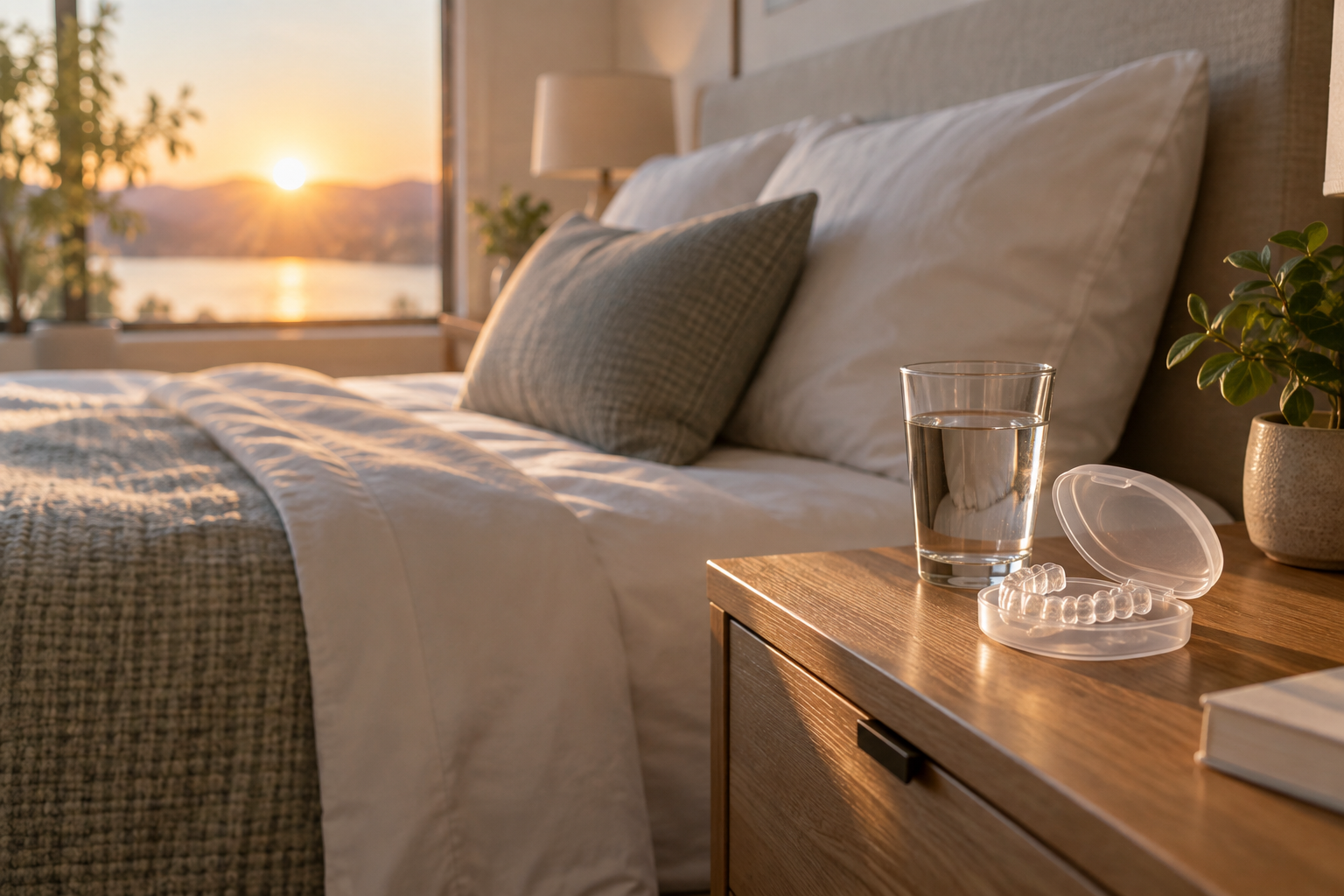
For many patients with mild to moderate obstructive sleep apnea, and for some who cannot tolerate CPAP therapy, a custom oral appliance is a proven treatment option. The appliance looks similar to a slim mouthguard and is worn only during sleep.
It works by:
- Gently positioning the lower jaw slightly forward
- Helping keep the airway open through the night
- Reducing the tissue collapse that causes snoring and breathing pauses
Because the appliance is small, quiet, and portable, many patients find it easier to use consistently than other therapies, especially when traveling.
What to Expect from the Process
If oral appliance therapy may be right for you, the process typically involves:
- Screening and referral. Your dentist discusses your symptoms and coordinates with your physician, since a sleep study is usually needed to confirm a diagnosis.
- Digital impressions. Once an appliance is prescribed, precise digital scans of your teeth are taken.
- Custom fabrication. The appliance is made to fit your mouth exactly, with support from the practice's on-site lab capabilities.
- Fitting and adjustment. The appliance is fitted, and small adjustments fine-tune comfort and effectiveness over follow-up visits.
- Ongoing monitoring. Regular checks make sure the appliance continues to fit well and work as intended.
Is an Oral Appliance Right for Everyone?
Not quite, and honest guidance matters here. Oral appliance therapy tends to work best for:
- Patients with mild to moderate obstructive sleep apnea, as confirmed by a sleep study
- Some patients with severe OSA who genuinely cannot tolerate CPAP, in coordination with their physician
- Primary snorers whose snoring has been evaluated and ruled out as apnea
CPAP remains the standard first-line treatment for many patients, especially those with more severe apnea. The goal is never to steer anyone away from the therapy that fits them best; it is to make sure patients who could benefit from an appliance know the option exists. Your dentist and physician work together to match the treatment to the diagnosis.
Better Sleep Supports Better Health
Patients who treat their sleep apnea often describe the change in broad terms: more energy, better focus, fewer morning headaches, and a happier household now that the snoring has quieted down. Sleep touches nearly every system in the body, which is why taking symptoms seriously is worth it. Partners often notice the difference first, both in quieter nights and in a more rested person across the breakfast table.
You can learn more on our sleep apnea treatment page.
If snoring, fatigue, or a partner's concern has you wondering about your sleep, bring it up at your next visit, or schedule a dedicated consultation. VSP Dental welcomes patients from Danville and surrounding South-Central Virginia communities. Call (434) 797-4200 or request an appointment to talk through your next step.